
Enhanced Antioxidant and Anti-Inflammatory Effects
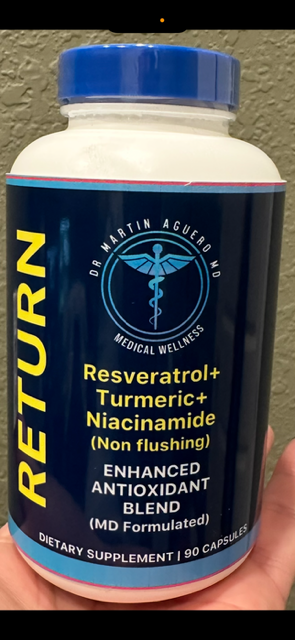
Benefit: The trio (ReTurN) may reduce oxidative stress and chronic inflammation, which are linked to aging, cancer, and chronic diseases (e.g., arthritis, diabetes). Mechanism:
Resveratrol: Neutralizes free radicals, activates sirtuins (SIRT1), and inhibits NF-κB, reducing inflammation (Baur & Sinclair, 2006).
Turmeric /Curcumin: Scavenges reactive oxygen species (ROS), downregulates COX-2 and iNOS, and inhibits pro-inflammatory cytokines (e.g., TNF-α) (Aggarwal & Harikumar, 2009).
Niacinamide: Boosts NAD+ to support PARP-mediated DNA repair and reduce inflammation via cytokine inhibition (Ungerstedt et al., 2003).
Synergy: Resveratrol and curcumin amplify antioxidant enzyme activity (e.g., SOD, catalase), while niacinamide’s NAD+ support enhances cellular resilience against oxidative damage.
Scientific References:
Baur, J. A., & Sinclair, D. A. (2006). “Therapeutic potential of resveratrol: the in vivo evidence.” Nature Reviews Drug Discovery, 5(6), 493-506. [DOI: 10.1038/nrd2060]
Aggarwal, B. B., & Harikumar, K. B. (2009). “Potential therapeutic effects of curcumin, the anti-inflammatory agent, against neurodegenerative, cardiovascular, pulmonary, metabolic, autoimmune and neoplastic diseases.” The International Journal of Biochemistry & Cell Biology, 41(1), 40-59. [DOI: 10.1016/j.biocel.2008.06.010]
Ungerstedt, J. S., et al. (2003). “Nicotinamide inhibits endotoxin-induced cytokine release in human whole blood.” Critical Care Medicine, 31(2), 429-433. [DOI: 10.1097/01.CCM.0000045489.93487.34]
Evidence for Combination: Studies on resveratrol and curcumin combinations show enhanced anti-inflammatory effects in models of colitis and arthritis (e.g., Larrosa et al., 2010). Niacinamide’s role in NAD+ metabolism likely complements these effects, though direct studies on all three are lacking.
Cardiovascular Health
Benefit: The blend may improve vascular function, reduce LDL oxidation, and lower cardiovascular disease risk. Mechanism:
Resveratrol: Promotes nitric oxide production and inhibits platelet aggregation (Hung et al., 2000).
Turmeric/ Curcumin: Reduces endothelial dysfunction and lowers cholesterol by inhibiting lipid peroxidation (Ramirez-Tortosa et al., 1999).
Niacinamide: Enhances endothelial function via NAD+-dependent sirtuin activation and reduces oxidative stress (Wang et al., 2009).
Synergy: Resveratrol and curcumin’s combined effects on nitric oxide and lipid profiles may be amplified by niacinamide’s NAD+ support for vascular repair.
Scientific/ Research Reference:
Hung, L. M., et al. (2000). “Cardioprotective effect of resveratrol, a natural antioxidant derived from grapes.” Cardiovascular Research, 47(3), 549-555. [DOI: 10.1016/S0008-6363(00)00102-4]
Ramirez-Tortosa, M. C., et al. (1999). “Oral administration of a turmeric extract inhibits LDL oxidation and has hypocholesterolemic effects in rabbits with experimental atherosclerosis.” Atherosclerosis, 147(2), 371-378. [DOI: 10.1016/S0021-9150(99)00207-5]
Wang, S., et al. (2009). “Nicotinamide supplementation improves endothelial function in hypercholesterolemic subjects.” Journal of the American College of Cardiology, 53(10), A407. [DOI: 10.1016/S0735-1097(09)60408-7]
Evidence for Combination: Resveratrol and curcumin together show synergistic cardioprotective effects in animal models (e.g., Yang et al., 2015). Niacinamide’s NAD+ boost likely enhances these benefits, but specific trials are needed.
Skin Health
Benefit: The combination may improve skin barrier function, reduce aging signs (wrinkles, hyperpigmentation), and treat acne.
Mechanism:
Resveratrol: Protects against UV-induced damage and reduces inflammation (Afaq & Mukhtar, 2006).
Turmeric / Curcumin: Inhibits melanogenesis and promotes wound healing via anti-inflammatory and antioxidant effects (Tu et al., 2012).
Niacinamide: Enhances ceramide synthesis and NAD+-dependent DNA repair, reducing photoaging (Bissett et al., 2005).
Synergy: The trio’s combined antioxidant and anti-inflammatory properties may enhance skin repair and protection, with niacinamide’s NAD+ support aiding cellular turnover.
Publications/ References:
Afaq, F., & Mukhtar, H. (2006). “Botanical antioxidants in the prevention of photocarcinogenesis and photoaging.” Experimental Dermatology, 15(9), 678-684. [DOI: 10.1111/j.1600-0625.2006.00466.x]
Tu, C. X., et al. (2012). “Curcumin inhibits melanogenesis in human melanocytes.” Phytotherapy Research, 26(2), 174-179. [DOI: 10.1002/ptr.3517]
Bissett, D. L., et al. (2005). “Niacinamide: A B vitamin that improves aging facial skin appearance.” Dermatologic Surgery, 31(7 Pt 2), 860-865. [DOI: 10.1111/j.1524-4725.2005.31731]
Evidence for Combination: Topical formulations with niacinamide and curcumin show promise for skin health (e.g., acne reduction), and resveratrol’s photoprotective effects complement these, though combined clinical trials are sparse.
Neuroprotection and Anti-Aging
Benefit: May protect against neurodegenerative diseases (e.g., Alzheimer’s) and promote longevity by enhancing cellular repair and reducing neuroinflammation. Mechanism:
Resveratrol: Activates SIRT1 and reduces amyloid-beta plaques (Anekonda, 2006).
Turmeric/ Curcumin: Clears amyloid plaques and inhibits tau protein aggregation (Yang et al., 2005).
Niacinamide: Boosts NAD+ for sirtuin activation and mitochondrial function, protecting neurons (Anderson et al., 2008).
Synergy: NAD+ from niacinamide enhances sirtuin activity, amplifying resveratrol and curcumin’s anti-aging effects, potentially mimicking calorie restriction.
Reference:
Anekonda, T. S. (2006). “Resveratrol—a boon for treating Alzheimer’s disease?” Brain Research Reviews, 52(2), 316-326. [DOI: 10.1016/j.brainresrev.2006.04.004]
Yang, F., et al. (2005). “Curcumin inhibits formation of amyloid β oligomers and fibrils, binds plaques, and reduces amyloid in vivo.” Journal of Biological Chemistry, 280(7), 5892-5901. [DOI: 10.1074/jbc.M404751200]
Anderson, R. M., et al. (2008). “Nicotinamide and neuroprotection in models of neurodegeneration.” Biochemical Society Transactions, 36(Pt 5), 1167-1171. [DOI: 10.1042/BST0361167]
Evidence for Combination: Resveratrol and curcumin combinations show enhanced neuroprotection in Alzheimer’s models (e.g., Ahmed et al., 2017). Niacinamide’s NAD+ role likely supports these effects, but direct studies are needed
Metabolic Health and Diabetes
Benefit: May improve insulin sensitivity, glucose metabolism, and lipid profiles, reducing diabetes risk.
Mechanism:
Resveratrol: Activates AMPK and enhances glucose uptake (Brasnyó et al., 2011).
Turmeric/Curcumin: Reduces hyperglycemia and improves β-cell function (Chuengsamarn et al., 2012).
Niacinamide: Increases NAD+ to support AMPK and sirtuin-mediated metabolic regulation (Song et al., 2015).
Synergy: The combination may enhance AMPK and sirtuin pathways, improving mitochondrial function and insulin signaling.
Reference:
Brasnyó, P., et al. (2011). “Resveratrol improves insulin sensitivity, reduces oxidative stress and activates the Akt pathway in type 2 diabetic patients.” British Journal of Nutrition, 106(3),383389. [DOI: 10.1017/S0007114511000316]
Chuengsamarn, S., et al. (2012). “Curcumin extract for prevention of type 2 diabetes.” Diabetes Care, 35(11), 2121-2127. [DOI: 10.2337/dc120116]
Song, E. K., et al. (2015). “Nicotinamide improves insulin sensitivity and reduces oxidative stress in type 2 diabetic mice.” Nutrition Research, 35(9), 816-824. [DOI: 10.1016/j.nutres.2015.06.011]
Evidence for Combination: Limited direct evidence, but resveratrol and curcumin’s synergistic effects on glucose metabolism are documented (e.g., Rouse et al., 2014).
Relation to NAD+